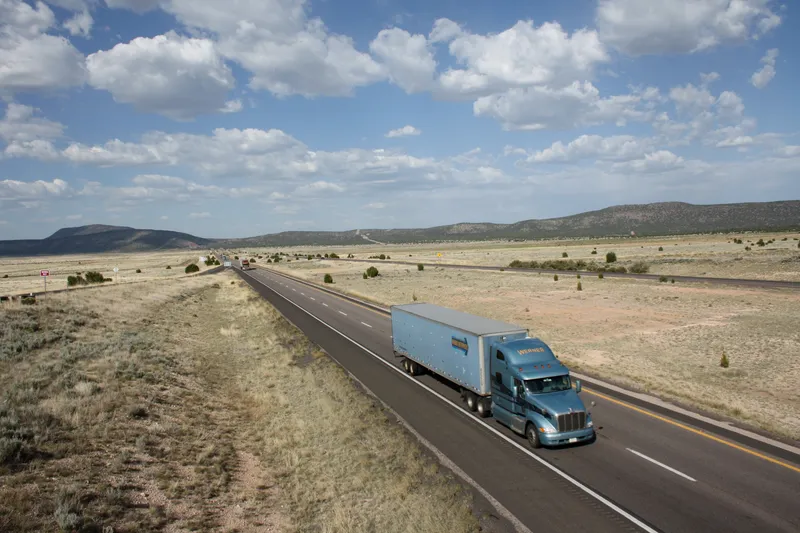
The federal definitions
The classes come from 49 CFR 383.91, which calls them vehicle groups:
| Class A (combination vehicle) | Class B (heavy straight vehicle) | |
|---|---|---|
| Weight | Gross combination weight rating (GCWR) of 26,001 lb or more | Gross vehicle weight rating (GVWR) of 26,001 lb or more |
| What it tows | A towed unit rated more than 10,000 lb | Nothing, or a vehicle rated 10,000 lb or less |
| Can also drive | Class B and C vehicles, with the right endorsements | Class C vehicles, with the right endorsements |
Class C is everything below those thresholds that is either designed to carry 16 or more passengers including the driver, or carries placarded hazardous materials (49 CFR 383.91).
FMCSA's own wording adds a detail that matters at the scale: the threshold is the rating or the actual weight, whichever is greater (FMCSA, Drivers). An overloaded truck rated below 26,001 lb can still need a CDL.
The 10,000-pound trailer line
The line between A and B is the towed unit, not the truck. Take a straight truck rated at 26,001 lb or more:
- Towing a trailer rated 10,000 lb or less: still Class B.
- Towing a trailer rated more than 10,000 lb: the combination is Class A.
The same logic catches lighter trucks used in commerce. A pickup or medium truck under 26,001 lb pulling a heavy trailer is Class A as soon as the combined rating reaches 26,001 lb and the trailer is rated over 10,000 lb. Check the GVWR plates on both units, not the scale ticket alone: for the skills test, the state uses the weight rating, not the actual weight, to decide whether your test vehicle fits the class.
Typical vehicles
New York's manual gives one-line examples for each class (CDL-10, Section 1):
- Class A: a tractor-trailer or a truck-trailer.
- Class B: a heavy single-unit truck or a bus.
- Class C: a single-unit truck, a bus or a stretch limousine, when it falls under the Class C passenger or hazardous materials criteria.
Applied to everyday vehicles: a tractor pulling a semi-trailer rated over 10,000 lb is Class A once the combination is rated at 26,001 lb or more. A single heavy vehicle, such as a dump truck, a large box truck or a large bus rated at 26,001 lb or more, is Class B as long as nothing rated over 10,000 lb is towed. A bus still needs a passenger endorsement, and a school bus a school bus endorsement, on top of the class: see CDL endorsements.
States may be stricter than the federal floor. FMCSA notes that states can have a more restrictive category for a class. California, for example, puts any vehicle with 3 or more axles weighing over 6,000 lb in commercial Class B (California handbook). Read your own state's class table.
Which tests each class needs
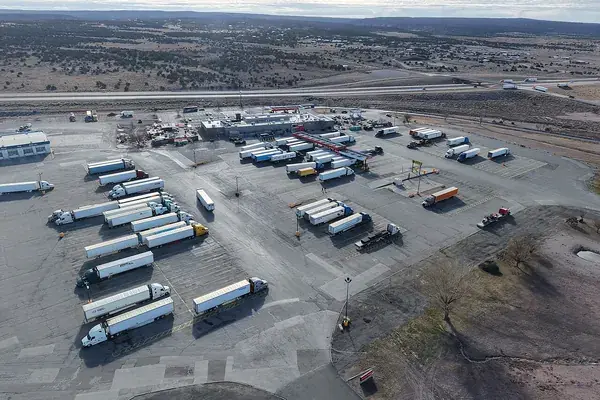
Both classes start with the same written test and the same skills test structure. The difference is one extra knowledge test and the vehicle you test in.
| Step | Class A | Class B |
|---|---|---|
| General knowledge test | Yes | Yes |
| Combination vehicles test | Yes | No |
| Air brakes test | If the vehicle has air brakes | If the vehicle has air brakes |
| Skills test vehicle | A representative Class A combination | A representative Class B vehicle |
Every knowledge test needs 80% correct, and failing the combination test means the state must not issue a Class A permit or license. Our general knowledge test guide has the question counts, and the brake test is covered in the CDL air brakes test.
The test vehicle also shapes the license you get, through restrictions (49 CFR 383.95):
- Test a Class A combination joined by a pintle hook or other non-fifth-wheel connection, and you are restricted from tractor-trailers that use a fifth wheel. Removing that restriction later means retaking all three skills tests in a tractor-trailer.
- Test in a vehicle without air brakes, and you cannot drive any CMV with air brakes.
- Test with an automatic transmission, and you cannot drive a manual.
If you want a tractor-trailer job, test in a tractor-trailer with air brakes and, if you can, a manual gearbox.
Training: ELDT for both, with one shortcut
Entry-level driver training is required before the skills test for a first Class A or Class B CDL, and for an upgrade from Class B to Class A (49 CFR 380.609). The curricula are different: Class A behind-the-wheel training must be done in a vehicle that needs a Class A CDL, Class B training in one that needs a Class B (Part 380, appendices A and B).
The shortcut: a driver who already holds a valid Class B CDL may take the shorter Theory Instruction Upgrade Curriculum instead of the standard Class A theory course (Part 380, appendix A). Behind-the-wheel training in a Class A vehicle is still required. Some states add more: California requires at least 15 hours of behind-the-wheel training for an original Class A or B CDL. Details in our entry-level driver training guide.
Which one to get
Start from the job, not the license:
- You will pull trailers over 10,000 lb, or want the widest choice of trucking jobs: Class A. It covers Class B and C vehicles too, with the matching endorsements (49 CFR 383.91(c)).
- You will drive one heavy vehicle (dump truck, bus, box truck) and never tow more than 10,000 lb: Class B is enough, with one knowledge test fewer.
- You might move up later: going from B to A means a new permit, the combination test, ELDT for the upgrade and a new skills test in a Class A vehicle.
Age rules are the same for both. You can get a CLP at 18, but federal driver qualification rules require you to be at least 21 to drive a CMV in interstate commerce; New York, for example, limits CDL holders under 21 to driving within the state.
Practice for the knowledge tests
Our CDL practice tests cover general knowledge, air brakes and the combination vehicles test that only Class A applicants take. The CDL practice pack has full-length sets in the 50 + 25 + 20 format. The questions are original, written from the state manuals and federal rules, and are not taken from any state's test.
Sources
- 49 CFR 383.91, Commercial motor vehicle groups — eCFR (checked October 3, 2026)
- Commercial Driver's License, Drivers (classes, endorsements, restrictions) — FMCSA (checked October 3, 2026)
- 49 CFR 383.133, Test methods — eCFR (checked October 3, 2026)
- 49 CFR 383.135, Passing knowledge and skills tests — eCFR (checked October 3, 2026)
- 49 CFR 383.95, Restrictions — eCFR (checked October 3, 2026)
- 49 CFR 380.609, General entry-level driver training requirements — eCFR (checked October 3, 2026)
- 49 CFR Part 380, Special training requirements (ELDT curricula, appendices A and B) — eCFR (checked October 3, 2026)
- 49 CFR 391.11, General qualifications of drivers — eCFR (checked October 3, 2026)
- New York State Commercial Driver's Manual (CDL-10), Section 1 — NYS DMV (checked October 3, 2026)
- California Commercial Driver Handbook — California DMV (checked October 3, 2026)
- Commercial Driver's Licenses (CDL) — California DMV (checked October 3, 2026)
passmock is an independent practice service. It is not affiliated with or endorsed by the Federal Motor Carrier Safety Administration (FMCSA), the U.S. Department of Transportation, the American Association of Motor Vehicle Administrators (AAMVA) or any state DMV, DPS or driver licensing agency. Our questions are original practice questions written from the official state CDL manuals and federal regulations; they are not taken from any state's test.
Short on time? A professional can help
Prefer to work with a professional? A tutor, a prep course or a driving school: we can pass your request to up to 3 partners. Free, no obligation; passmock does not teach. How to choose.