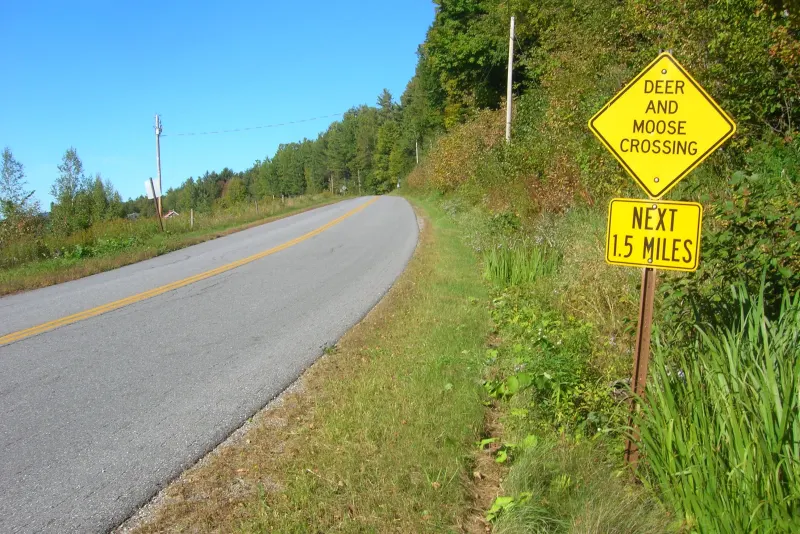
Free US road signs practice test (40 questions)
Click an answer to see instantly if it is right, with the explanation. No sign-up, no email.
-
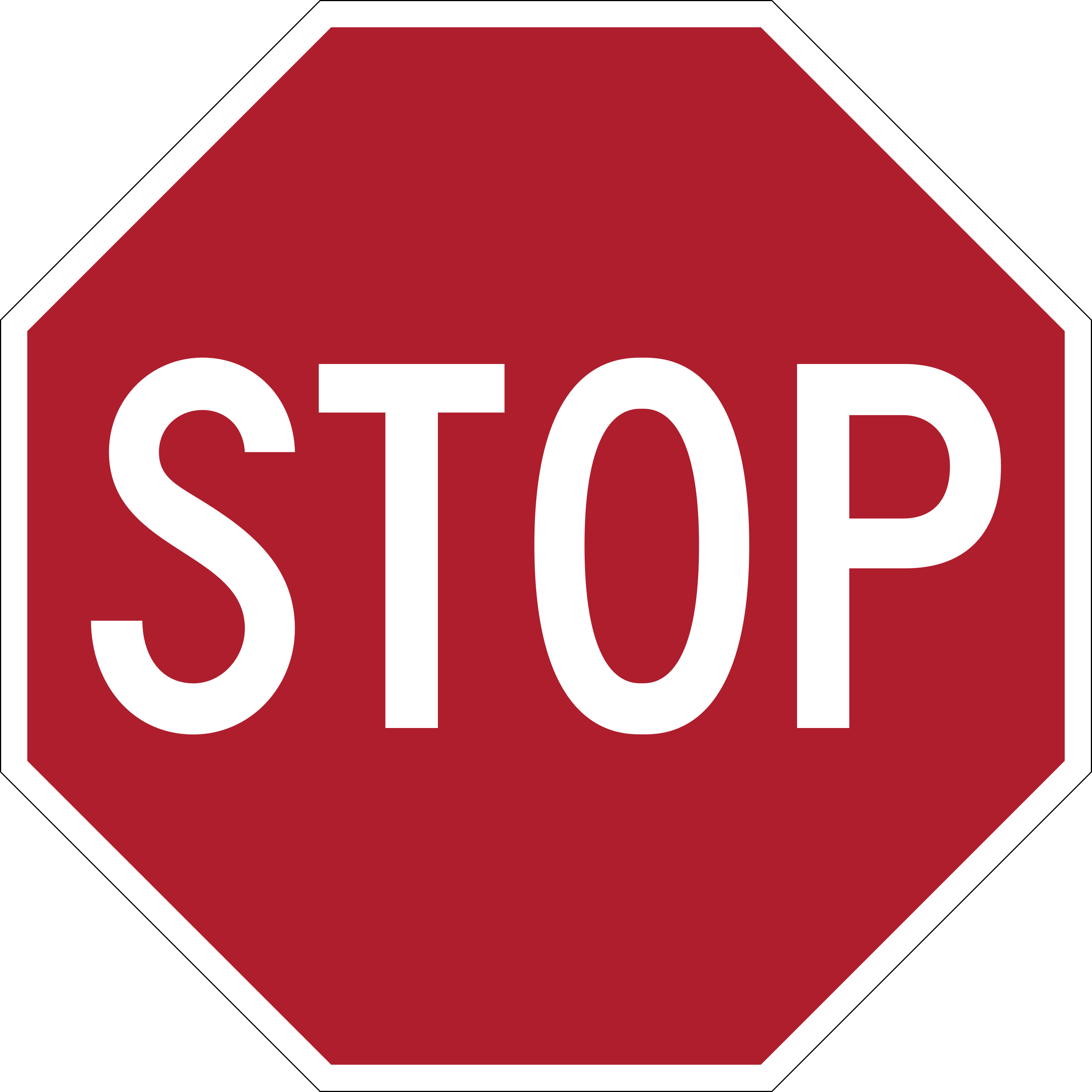
Question 1You reach a red, eight-sided sign at an intersection. What must you do?
Show the answer
Answer: A — Come to a full stop before going on.
The octagon is used only for the STOP sign, which is installed where a full stop is always required. Slowing down without stopping is what a YIELD sign allows, not a STOP sign.
Checked against: MUTCD 11th Ed. Rev. 1, Section 2A.05, Table 2A-1 (octagon) and Section 2B.04 (STOP sign)
-
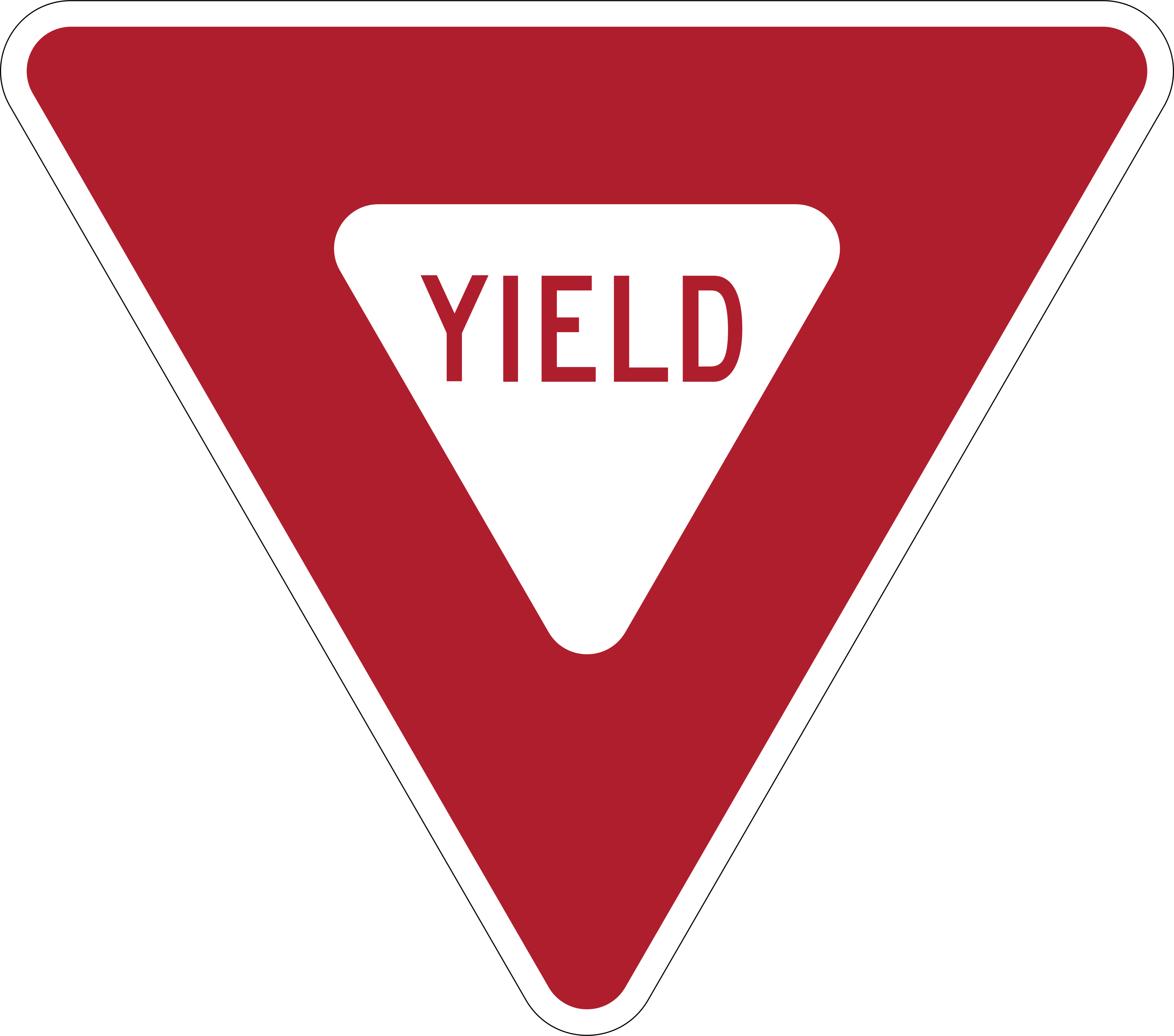
Question 2A red-and-white triangle with one point facing down stands where your street joins a busier road. What does it require?
Show the answer
Answer: C — Slow down and give the right-of-way to other traffic, stopping only when necessary.
The downward-pointing triangle is used only for YIELD. You slow to a reasonable speed and stop when needed to avoid interfering with conflicting traffic; a full stop is not required when the way is clear.
Checked against: MUTCD 11th Ed. Rev. 1, Section 2A.05, Table 2A-1 and Section 2B.05 (YIELD sign)
-
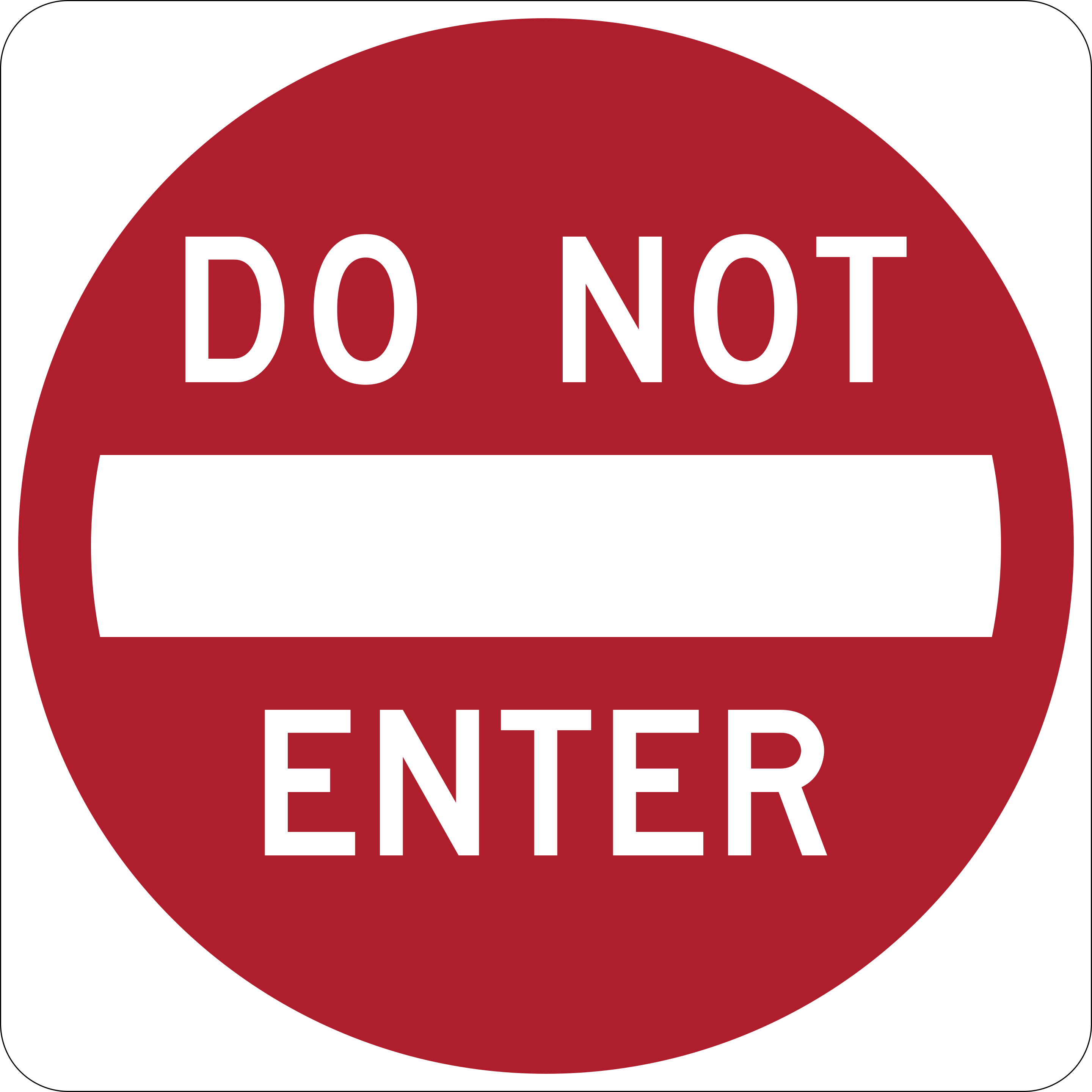
Question 3A square sign shows a red circle with a white horizontal bar across it at the entrance to a street. What does it mean?
Show the answer
Answer: B — You must not enter that roadway from your direction.
This is the DO NOT ENTER sign. It is posted, for example, where a two-way road becomes one-way or where a freeway exit ramp meets the crossroad, to stop drivers entering against traffic.
Checked against: MUTCD 11th Ed. Rev. 1, Section 2B.46 (DO NOT ENTER sign)
-
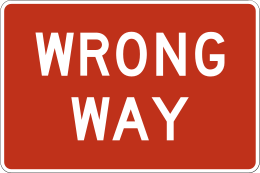
Question 4After turning onto a ramp you see a red rectangular sign with white letters reading WRONG WAY. What does it tell you?
Show the answer
Answer: D — You are traveling against the one-way flow of traffic and must turn back safely.
The WRONG WAY sign supplements the DO NOT ENTER sign on one-way roadways and ramps. It is placed farther along the one-way road so that a driver who has entered the wrong way sees it.
Checked against: MUTCD 11th Ed. Rev. 1, Section 2B.47 (WRONG WAY sign)
-
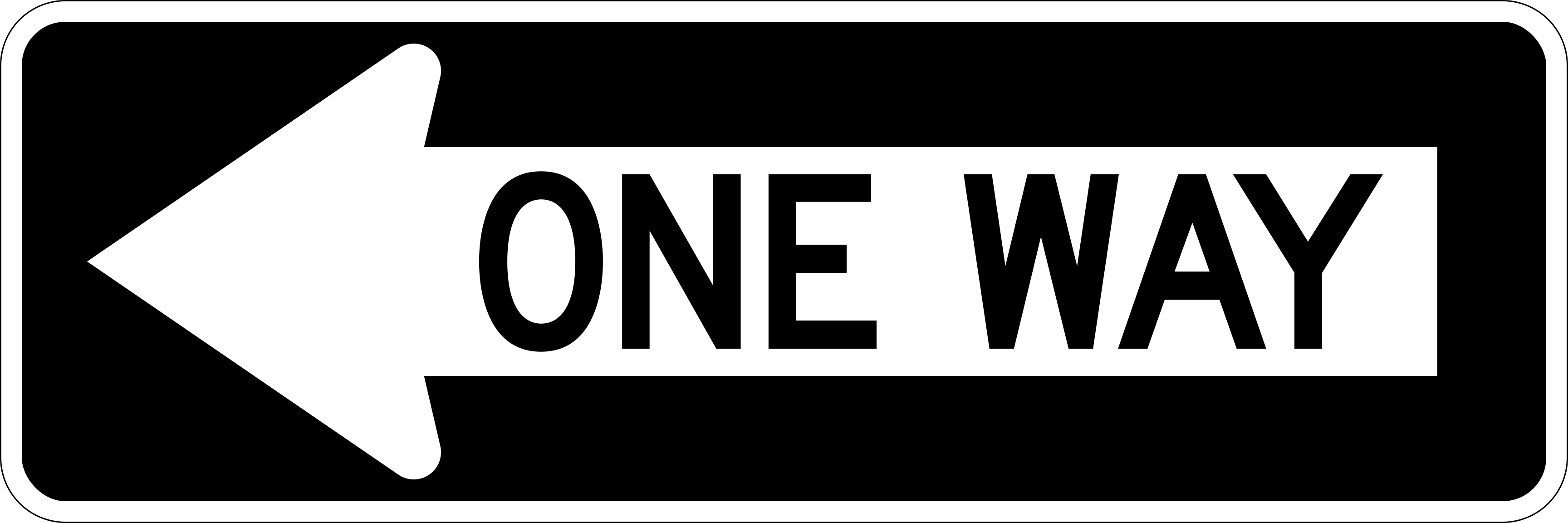
Question 5A black-and-white horizontal sign with a white arrow and the words ONE WAY is posted parallel to the street you are about to turn onto. What does it mean?
Show the answer
Answer: A — Vehicles on that street may travel only in the direction of the arrow.
ONE WAY signs mark streets on which vehicles may travel in one direction only. They are placed parallel to the one-way street at the roads and alleys that meet it, so turn only in the arrow's direction.
Checked against: MUTCD 11th Ed. Rev. 1, Section 2B.49 (ONE WAY signs)
-
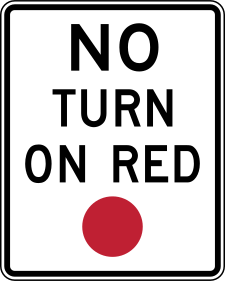
Question 6Your signal shows a steady red light and a sign reading NO TURN ON RED is posted next to the signal. You want to turn right. What should you do?
Show the answer
Answer: C — Stay stopped and wait for a signal that allows the turn.
A right turn on a steady red after stopping is normally allowed, except where a traffic control device prohibits it. The NO TURN ON RED sign is that prohibition, so you wait for a signal that permits the turn.
Checked against: MUTCD 11th Ed. Rev. 1, Section 4A.03 (steady red) and Section 2B.60 (No Turn on Red signs)
-
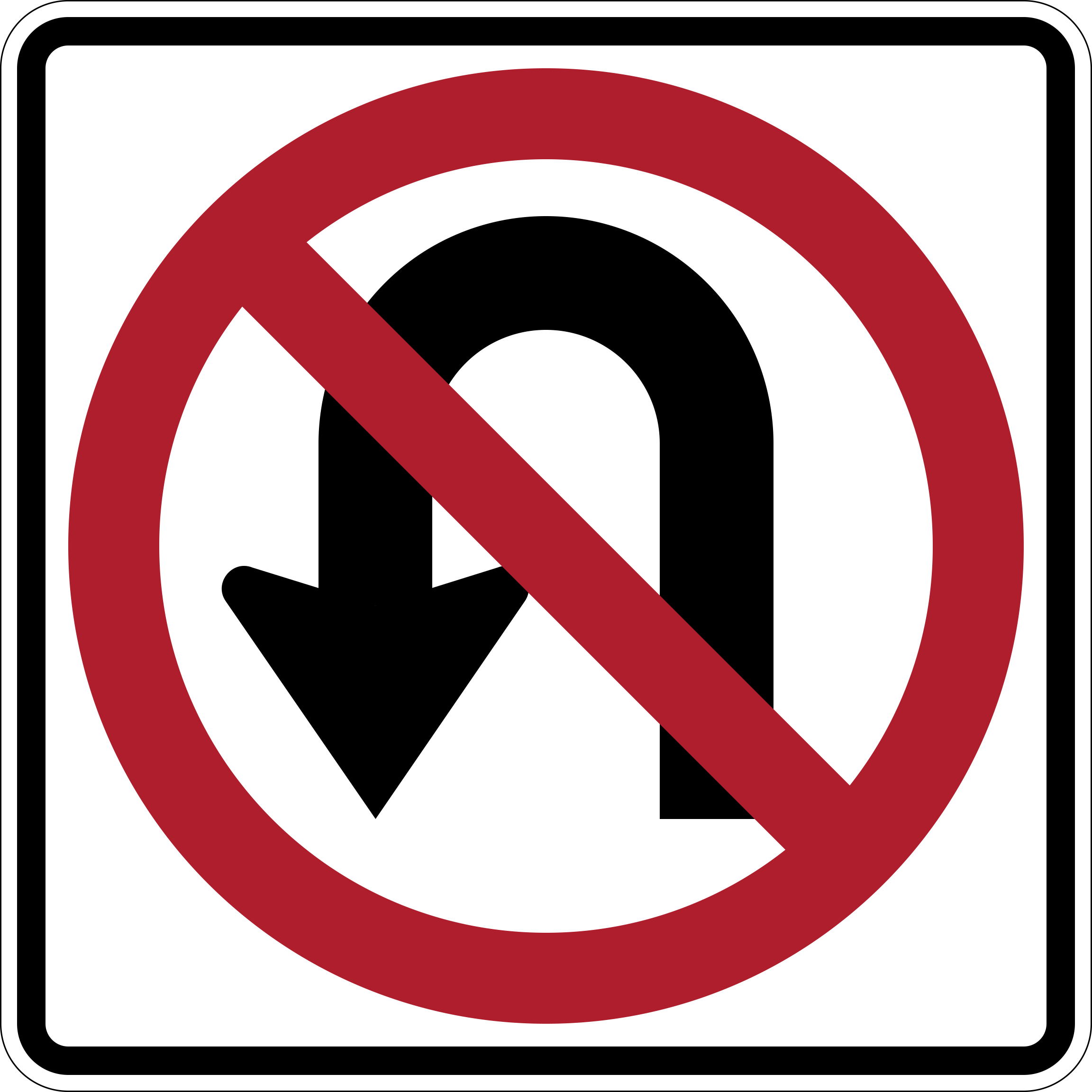
Question 7A white square sign shows a black U-shaped arrow inside a red circle with a red diagonal slash. What does it mean?
Show the answer
Answer: B — U-turns are not allowed here.
A red circle with a diagonal slash over a symbol means the action shown is prohibited. Here the symbol is a U-turn arrow, so this is a movement prohibition sign: no U-turn.
Checked against: MUTCD 11th Ed. Rev. 1, Section 2B.26 (Movement Prohibition signs) and Section 1D.05 (red = stop or prohibition)
-
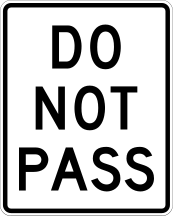
Question 8On a two-lane road you pass a white rectangular sign reading DO NOT PASS. Which statement is correct?
Show the answer
Answer: D — It is a regulatory sign: you must not pass other vehicles where it applies.
DO NOT PASS is a regulatory (black on white) sign that may be used with no-passing pavement markings to emphasize the restriction, at the beginning of and within a zone where passing is inappropriate.
Checked against: MUTCD 11th Ed. Rev. 1, Section 2B.36 (DO NOT PASS sign)
-
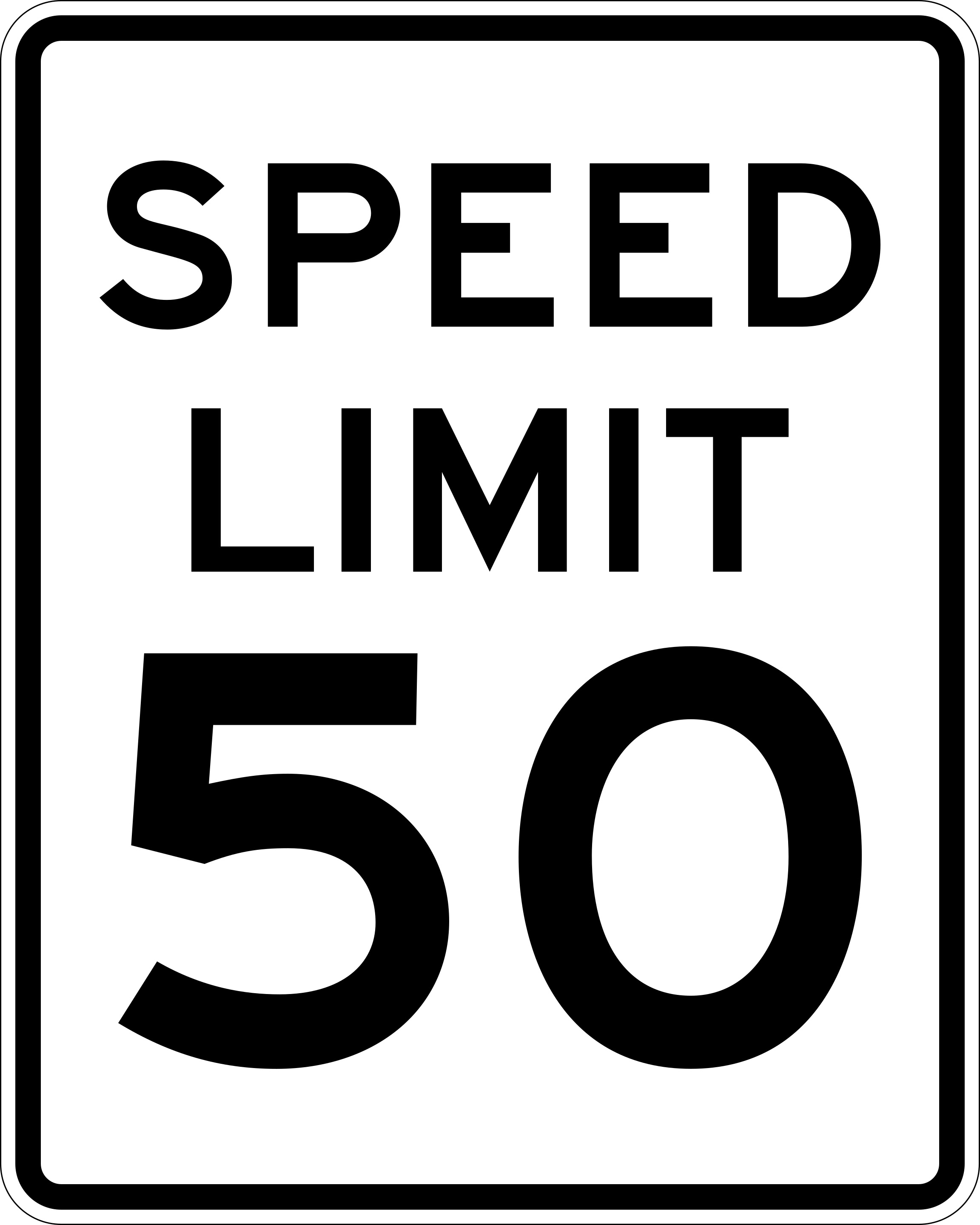
Question 9A white rectangular sign reads SPEED LIMIT 50. What kind of sign is this?
Show the answer
Answer: A — A regulatory sign showing the maximum legal speed.
Speed Limit signs are regulatory signs with a black legend on white. A recommended speed for a curve is shown on a yellow Advisory Speed plaque, which is a warning sign, not a legal limit.
Checked against: MUTCD 11th Ed. Rev. 1, Section 2B.21 (Speed Limit sign) and Section 2C.59 (Advisory Speed plaque)
-
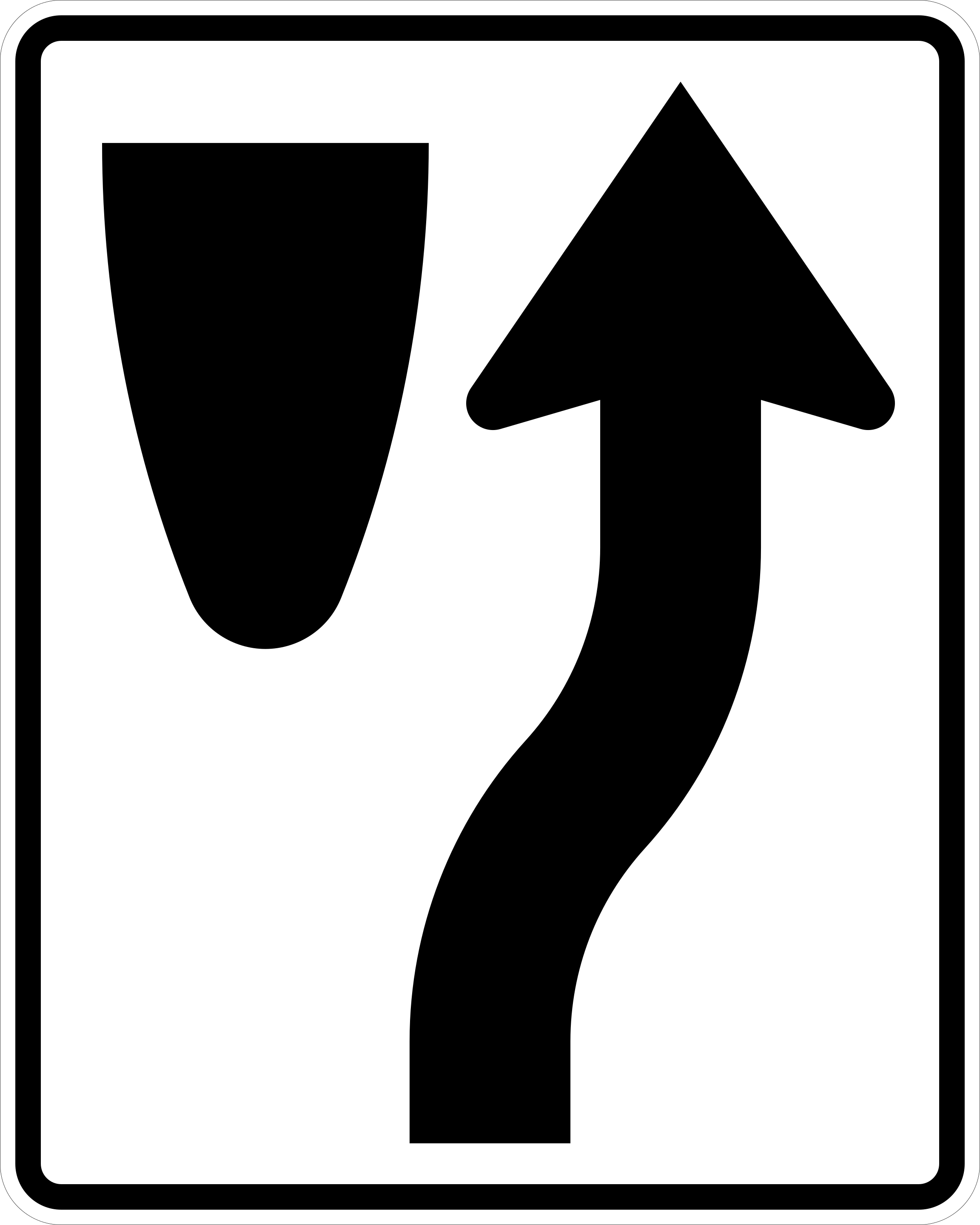
Question 10A white vertical sign shows a black arrow curving around the right side of a raised island symbol, at the start of a median. What must you do?
Show the answer
Answer: C — Keep to the right of the island.
This is the Keep Right sign. It is placed near the approach end of a median or island to tell drivers to pass on the right side of it.
Checked against: MUTCD 11th Ed. Rev. 1, Section 2B.39 (Keep Right and Keep Left signs)
-
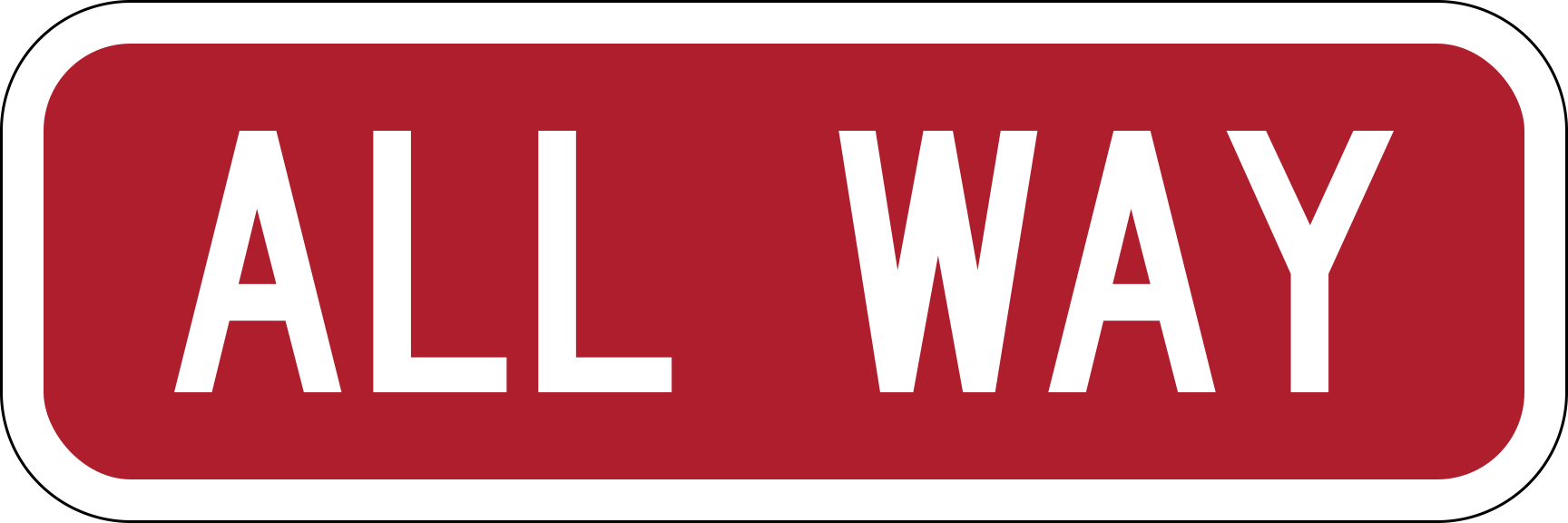
Question 11A small red plaque with the white words ALL WAY is mounted below a STOP sign. What does it tell you?
Show the answer
Answer: B — Every approach to the intersection is controlled by a STOP sign.
The ALL-WAY plaque must be mounted below each STOP sign at intersections where all approaches are controlled by STOP signs, so you know every driver has to stop.
Checked against: MUTCD 11th Ed. Rev. 1, Section 2B.04 (STOP sign and ALL-WAY plaque)
-
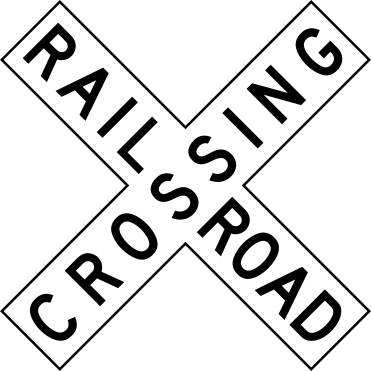
Question 12A white X-shaped sign reading RAILROAD CROSSING stands beside the road at the tracks. In most states, what does it require of you?
Show the answer
Answer: D — Yield the right-of-way to trains.
The Crossbuck is the only sign with an X shape. The MUTCD notes that in most states it requires road users to yield the right-of-way to rail traffic, so slow down, look and listen, and be ready to stop.
Checked against: MUTCD 11th Ed. Rev. 1, Section 8B.03 (Grade Crossing (Crossbuck) sign)
-
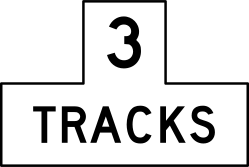
Question 13A small plaque shaped like an upside-down T under a railroad crossbuck shows the number 3. What does the number mean?
Show the answer
Answer: A — There are three tracks at the crossing.
When a crossing has two or more tracks, the number of tracks is shown on a Number of Tracks plaque of inverted T shape mounted below the Crossbuck. After one train passes, another may be coming on a different track.
Checked against: MUTCD 11th Ed. Rev. 1, Section 8B.03 (Number of Tracks plaque R15-2P)
-
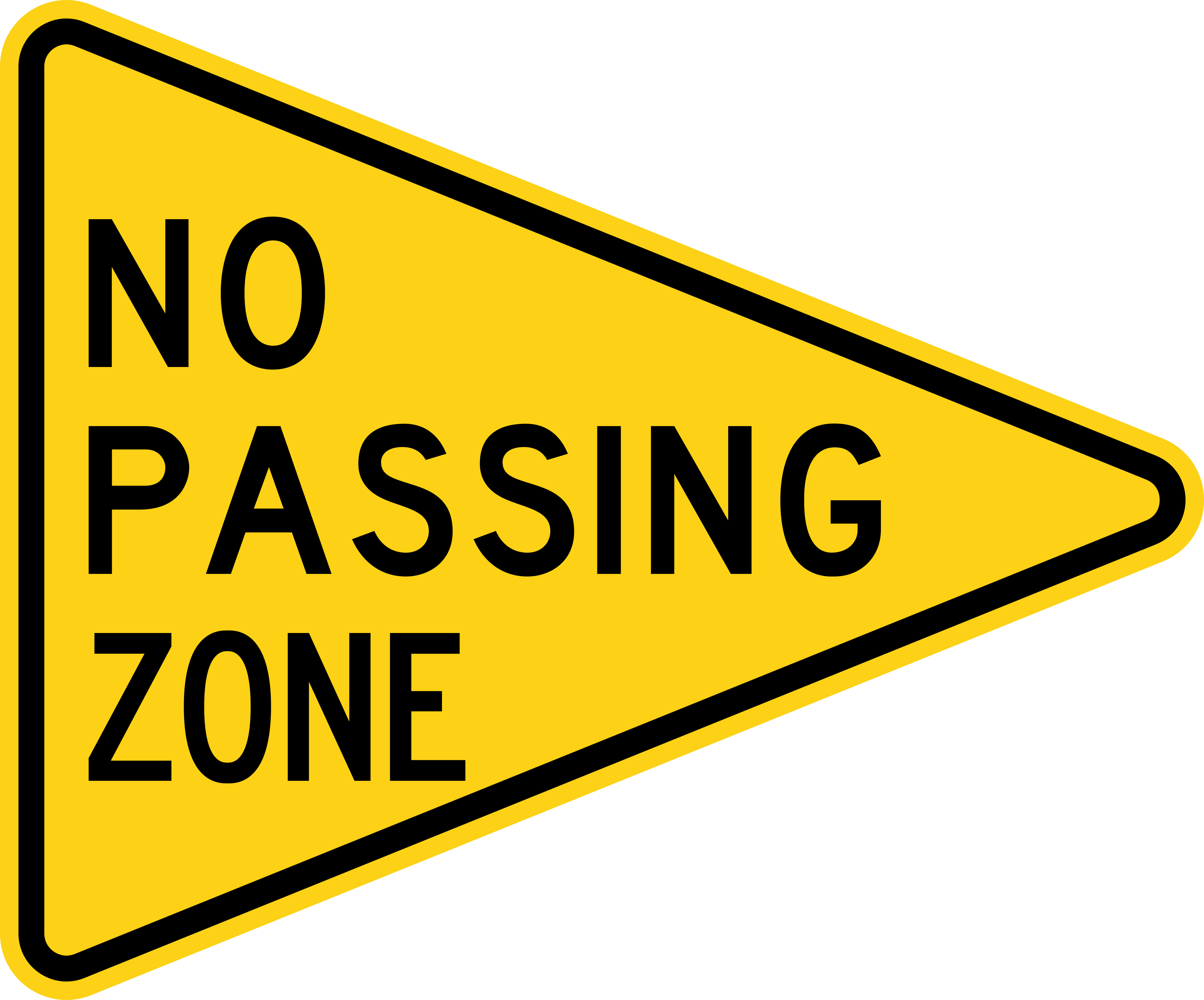
Question 14A yellow sign shaped like a pennant (a long triangle pointing to the right) is posted on the left side of a two-lane road. What does it mark?
Show the answer
Answer: C — The beginning of a no-passing zone.
The pennant shape is used only for the NO PASSING ZONE sign. It is installed on the left-hand side of the roadway, where a passing driver will see it, at the beginning of a no-passing zone.
Checked against: MUTCD 11th Ed. Rev. 1, Section 2C.53 (NO PASSING ZONE sign) and Table 2A-1
-
Question 15A round yellow sign with a black X and two letters R is posted beside the road. What does it warn you about?

Show the answer
Answer: B — A railroad grade crossing ahead.
The circle is used only for the Grade Crossing Advance Warning sign, placed before a railroad crossing. Slow down, look and listen, and be ready to stop.
Checked against: MUTCD 11th Ed. Rev. 1, Table 2A-1 (circle) and Section 8B.06 (Grade Crossing Advance Warning sign)
-
Question 16A fluorescent yellow-green, five-sided sign shaped like a house shows two walking children. What does it tell you?

Show the answer
Answer: A — You are approaching a school area or the start of a school zone.
The upward-pointing pentagon is the School sign. It warns that you are approaching a school area and marks the beginning of a designated school zone; with a plaque it can also mark a school crossing.
Checked against: MUTCD 11th Ed. Rev. 1, Section 7B.02 (School Area signs) and Table 2A-1 (pentagon)
-
Question 17A yellow diamond sign shows a red octagon symbol with a black arrow above it. What does it warn you about?

Show the answer
Answer: B — A stop sign ahead that you may not see in time.
This is the Stop Ahead sign. It is required where a STOP sign is not visible far enough ahead for drivers to react, for example because of a curve or hill. Slow down and be ready to stop.
Checked against: MUTCD 11th Ed. Rev. 1, Section 2C.35 (Advance Traffic Control signs)
-
Question 18A yellow diamond sign shows a car with wavy tire tracks behind it. What does it warn you about?

Show the answer
Answer: C — The road may be slippery.
This is a surface condition sign warning that the road ahead can be slippery, typically when wet. Slow down and avoid sudden braking, acceleration or sharp steering.
Checked against: MUTCD 11th Ed. Rev. 1, Section 2C.30 (Surface Condition signs)
-
Question 19A yellow diamond sign shows two lanes side by side, and the right edge line bends in toward the left, narrowing the road from the right. What should a driver in the right lane expect?

Show the answer
Answer: A — The right lane ends ahead, so merge left when it is safe.
This is the Lane Ends warning sign, used where a lane is dropped. Drivers in the ending lane must find a gap and merge into the continuing lane.
Checked against: MUTCD 11th Ed. Rev. 1, Section 2C.47 (Lane Ends signs)
-
Question 20A yellow plaque reading 35 MPH is mounted under a curve warning sign on a road where the speed limit is 55 mph. What does the 35 MPH mean?

Show the answer
Answer: D — The advisory speed recommended for the curve.
The Advisory Speed plaque supplements a warning sign to show a recommended speed for the condition. It is a yellow warning plaque, not a regulatory speed limit, and the posted limit still applies elsewhere.
Checked against: MUTCD 11th Ed. Rev. 1, Section 2C.59 (Advisory Speed plaque)
-
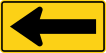
Question 21A horizontal yellow rectangle with one large black arrow pointing left is installed straight ahead of you. Where is this sign placed and what does it tell you?
Show the answer
Answer: B — On the outside of a sharp turn or curve, to show that the road turns left.
The One-Direction Large Arrow sign is installed on the outside of a turn or curve, facing approaching traffic, to emphasize an abrupt change of direction. It must not be used where there is no alignment change, such as at the ends of medians.
Checked against: MUTCD 11th Ed. Rev. 1, Section 2C.10 (One-Direction Large Arrow sign)
-
Question 22A diamond sign with a black walking person on a yellow or fluorescent yellow-green background is posted before a crossing. What should you expect?

Show the answer
Answer: C — Pedestrians may be crossing the road ahead.
The Pedestrian sign is a non-vehicular warning sign. Warning signs about pedestrians and bicyclists may use yellow or fluorescent yellow-green backgrounds. Slow down and be ready to yield to people crossing.
Checked against: MUTCD 11th Ed. Rev. 1, Section 2C.55 (Non-Vehicular Warning signs) and Section 2C.02, paragraph 8
-
Question 23A yellow diamond sign shows 12'-6" between an arrow pointing up and an arrow pointing down. What does it warn you about?

Show the answer
Answer: A — Overhead clearance of 12 feet 6 inches ahead; taller vehicles must not go under.
This is the Low Clearance sign. It warns of an overhead structure, such as a bridge or underpass, and shows the clearance height. A vehicle taller than the height shown must not enter.
Checked against: MUTCD 11th Ed. Rev. 1, Section 2C.25 (Low Clearance signs)
-
Question 24A yellow diamond sign shows three curved arrows chasing each other in a circle. What does it warn you about?

Show the answer
Answer: D — A circular intersection (roundabout) ahead.
The Circular Intersection sign is an intersection warning sign installed in advance of a roundabout or other circular intersection. Slow down and be ready to yield where you enter it.
Checked against: MUTCD 11th Ed. Rev. 1, Section 2C.41 (Intersection Warning signs, W2-6)
-
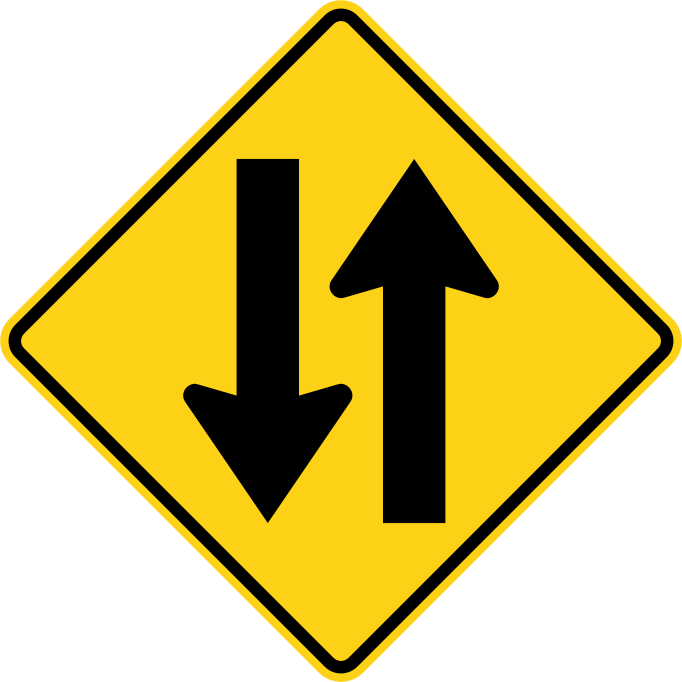
Question 25You have been driving on a one-way roadway. A yellow diamond sign shows two vertical arrows side by side, one pointing up and one pointing down. What does it tell you?
Show the answer
Answer: B — Two-way traffic is ahead: oncoming vehicles will share the road.
The Two-Way Traffic sign warns of a transition from a one-way street or a divided roadway to a two-lane, two-way road, so expect oncoming vehicles in the other lane. It is also used in work zones when one roadway of a divided highway is closed.
Checked against: MUTCD 11th Ed. Rev. 1, Section 2C.51 and Section 6H.16 (Two-Way Traffic sign)
-
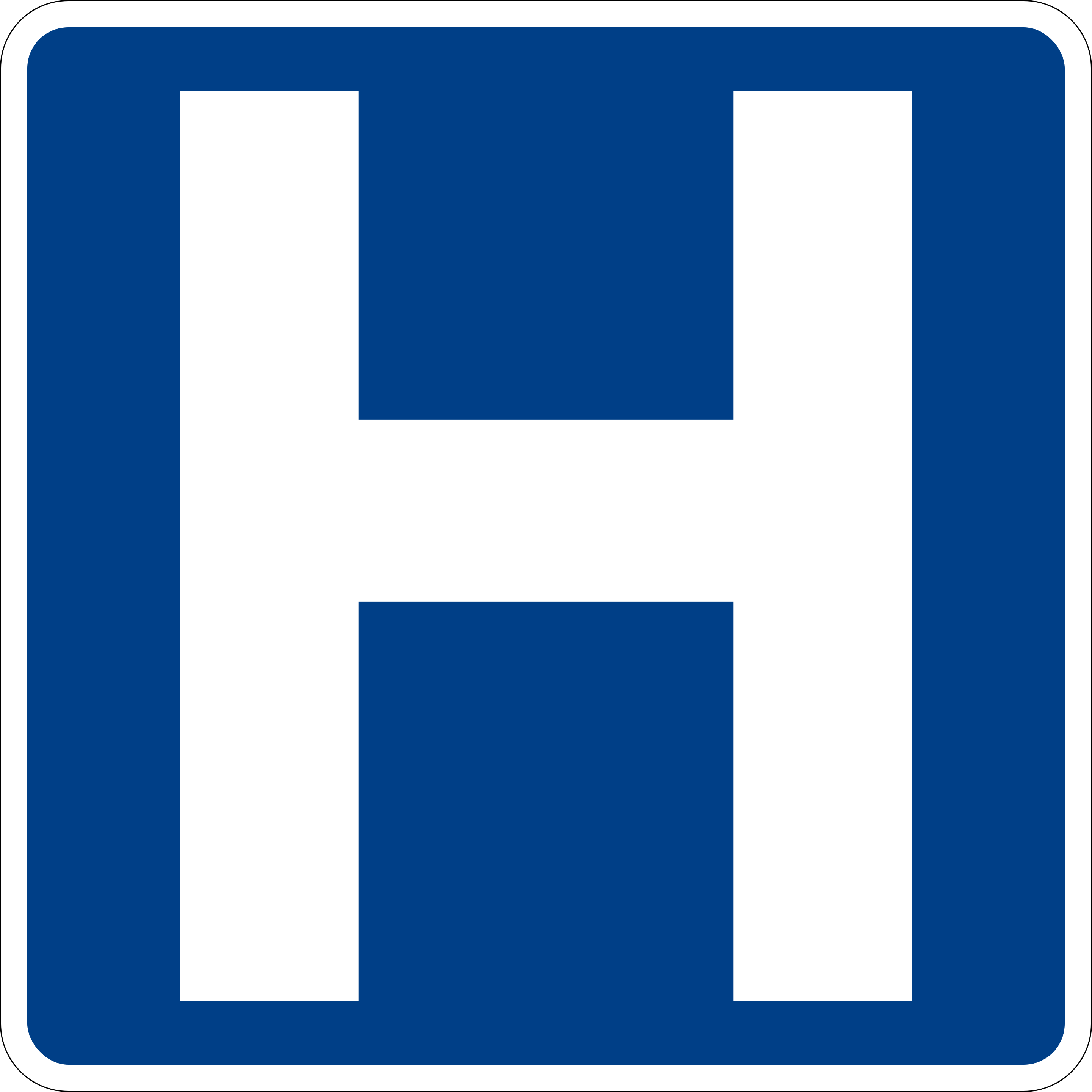
Question 26A blue square sign shows a large white letter H. What does it tell you?
Show the answer
Answer: C — A hospital is nearby.
Blue signs with white legends are General Service signs that point to road-user services. The H symbol is the Hospital sign.
Checked against: MUTCD 11th Ed. Rev. 1, Section 2I.02 (General Service signs, Hospital D9-2) and Section 1D.05 (blue)
-
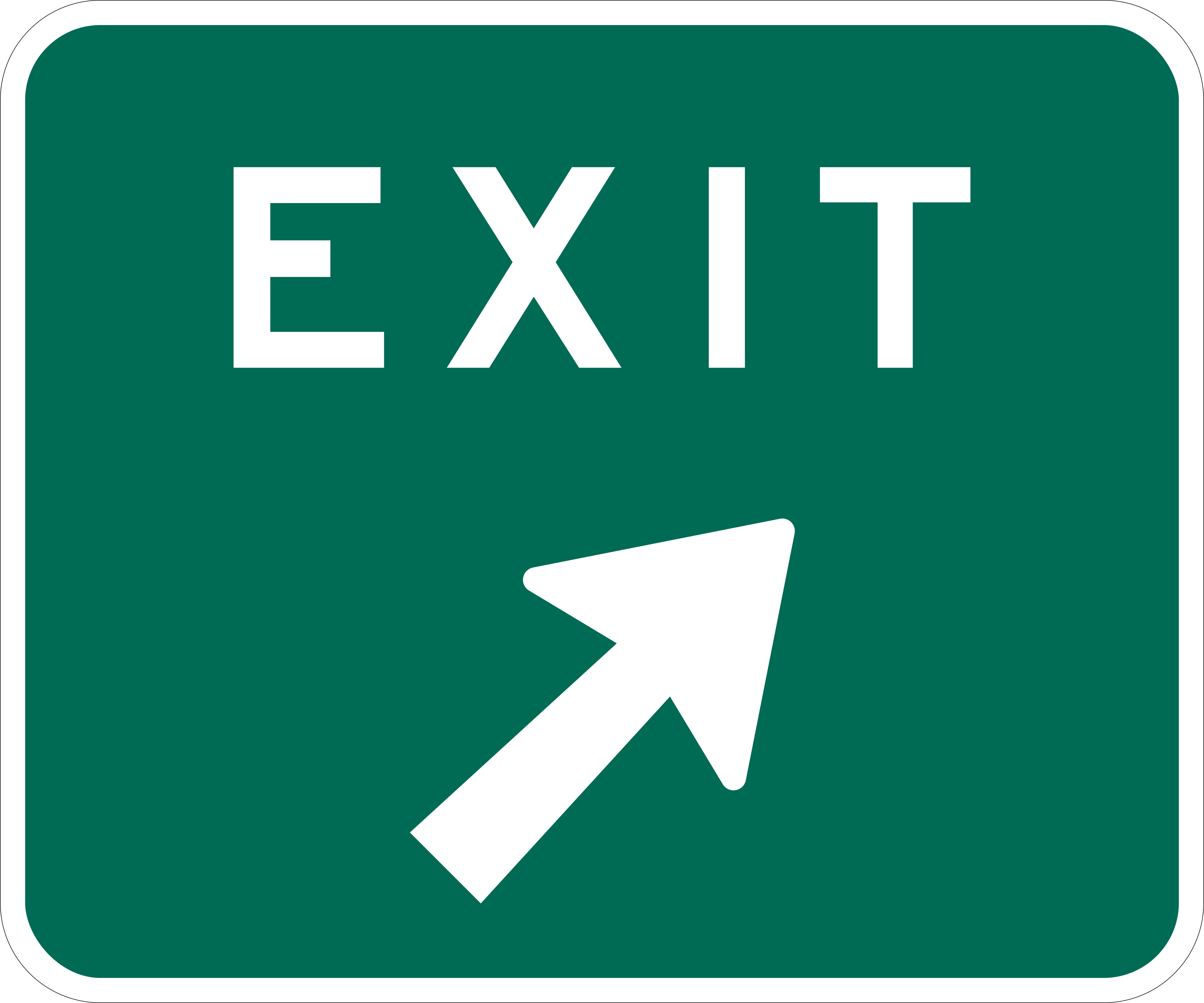
Question 27A green sign with a white arrow and the word EXIT stands where a ramp leaves the freeway. What does the green color tell you?
Show the answer
Answer: A — It is a guide sign giving directions.
Guide signs on streets and highways have a white message and border on a green background; green is the color for permitted movements and direction guidance. This one is an Exit Gore sign marking where the exit ramp departs.
Checked against: MUTCD 11th Ed. Rev. 1, Section 2D.02 (guide sign color), Section 2E.26 (Exit Gore signs) and Section 1D.05
-
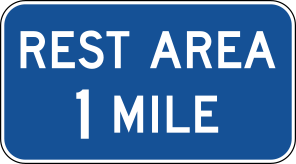
Question 28A blue sign reads REST AREA 1 MILE. What does its blue background tell you?
Show the answer
Answer: D — It guides you to services for road users.
Blue is the color for road-user services guidance, tourist information and evacuation routes. Rest area signs belong to this group. Brown would be used for recreational and cultural interest areas.
Checked against: MUTCD 11th Ed. Rev. 1, Section 1D.05 (Color Code) and Section 2I.05 (Rest Area signs)
-
Question 29Which background color is used on signs that guide you to recreational and cultural interest areas, such as parks and historic sites?
Show the answer
Answer: B — Brown.
The MUTCD color code assigns brown to recreational and cultural interest area guidance. Blue is for road-user services, purple for electronic toll account lanes, and orange for temporary traffic control.
Checked against: MUTCD 11th Ed. Rev. 1, Section 1D.05 (Color Code)
-
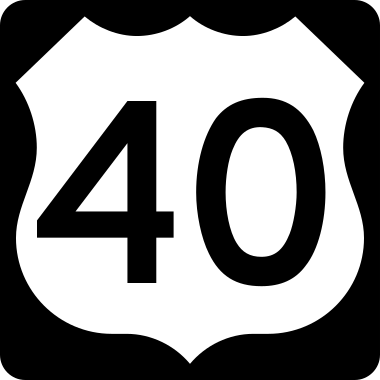
Question 30A white shield shape on a black square shows the number 40 in black. What does this sign identify?
Show the answer
Answer: C — A U.S. numbered route.
This is the U.S. Route sign, a black-and-white shield. The Interstate Route sign is a red, white and blue shield, and county route signs are blue pentagons with yellow legends.
Checked against: MUTCD 11th Ed. Rev. 1, Section 2D.11 (Design of Route Signs, Figure 2D-4) and Table 2A-2
-
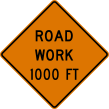
Question 31A diamond sign with black letters on an orange background reads ROAD WORK 1000 FT. What does the orange color tell you?
Show the answer
Answer: B — A temporary traffic control (work zone) situation ahead.
Orange is reserved for temporary traffic control. Work zone warning signs are diamonds with a black legend on orange, and the ROAD WORK sign is placed in advance of the work space.
Checked against: MUTCD 11th Ed. Rev. 1, Section 1D.05, Section 6H.01 and Section 6H.03 (ROAD WORK sign)
-
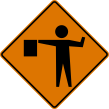
Question 32An orange diamond sign shows a person holding a flag. What should you expect ahead?
Show the answer
Answer: D — A flagger controlling traffic: slow down and be ready to follow the flagger's directions.
The Flagger sign is used in advance of any point where a flagger is stationed to control road users. Be ready to stop or proceed as the flagger directs.
Checked against: MUTCD 11th Ed. Rev. 1, Section 6H.15 (Flagger signs)
-
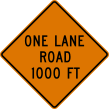
Question 33An orange sign reads ONE LANE ROAD 1000 FT. What does it mean?
Show the answer
Answer: A — Ahead, traffic in both directions must share a single lane.
The ONE LANE ROAD sign is used only in advance of a point where vehicles traveling in both directions must use a common single lane, often controlled by flaggers or temporary signals.
Checked against: MUTCD 11th Ed. Rev. 1, Section 6H.06 (ONE LANE ROAD sign)
-
Question 34On a highway you see warning signs with a black legend on a fluorescent pink background. What do they indicate?
Show the answer
Answer: C — An incident, such as a crash scene, being managed ahead.
Fluorescent pink is the MUTCD color for incident management. Warning signs used for traffic incident situations may be black on fluorescent pink instead of orange.
Checked against: MUTCD 11th Ed. Rev. 1, Section 1D.05 (Color Code) and Section 6H.01, paragraph 7
-
Question 35What do yellow lines along the road separate?
Show the answer
Answer: B — Traffic moving in opposite directions.
Yellow longitudinal lines separate traffic traveling in opposite directions (and mark the left edge of divided highways and one-way roads). White lines separate traffic moving in the same direction and mark the right edge.
Checked against: MUTCD 11th Ed. Rev. 1, Section 3A.03 (Colors of markings)
-
Question 36On a two-lane, two-way road the center line is a solid yellow line on your side and a broken yellow line on the other side. May you pass?
Show the answer
Answer: D — No, crossing is prohibited for traffic next to the solid line.
This is a one-direction no-passing zone marking: traffic next to the broken line may pass with care, but traffic next to the solid line may not. A solid line discourages or prohibits crossing; a broken line is permissive.
Checked against: MUTCD 11th Ed. Rev. 1, Section 3B.01 (Yellow center line markings) and Section 3A.04
-
Question 37You approach an intersection where the traffic signal is flashing red. What must you do?
Show the answer
Answer: A — Stop, then go when it is safe, just as at a STOP sign.
A flashing circular red means stop at the stop line (or crosswalk, or the point where you can see cross traffic). Your right to go is then subject to the same rules as after stopping at a STOP sign.
Checked against: MUTCD 11th Ed. Rev. 1, Section 4A.04 (Meanings of flashing signal indications)
-
Question 38The signal facing you is flashing yellow. What does it allow?
Show the answer
Answer: C — You may cautiously enter the intersection, yielding to pedestrians and vehicles already in it.
A flashing circular yellow lets you cautiously enter the intersection, but you must yield to pedestrians in the crosswalk and to vehicles lawfully in the intersection.
Checked against: MUTCD 11th Ed. Rev. 1, Section 4A.04 (Meanings of flashing signal indications)
-
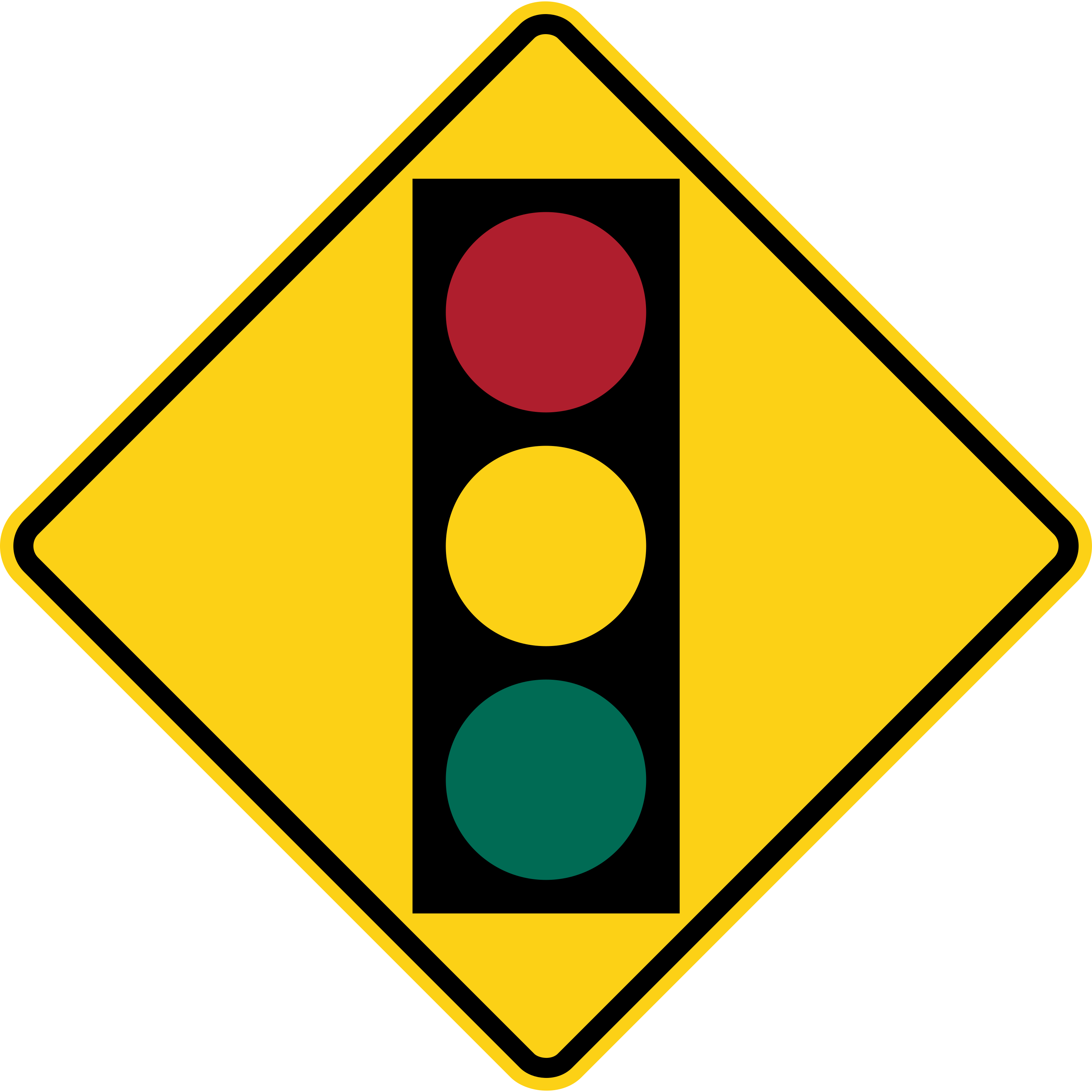
Question 39A yellow diamond sign shows a traffic signal symbol with red, yellow and green lenses. What does it warn you about?
Show the answer
Answer: B — A traffic signal ahead that may not be visible in time.
This is the Signal Ahead sign. It is required where a traffic signal is not visible far enough ahead for drivers to respond, and may be used for extra emphasis elsewhere.
Checked against: MUTCD 11th Ed. Rev. 1, Section 2C.35 (Advance Traffic Control signs)
-
Question 40Driving at night, you notice that the raised pavement markers in your lane shine red toward you. What does it mean?
Show the answer
Answer: D — You are on a roadway or ramp that must not be entered from your direction: you are going the wrong way.
Red raised pavement markers are visible to drivers traveling the wrong way on one-way roadways and ramps (they also mark truck escape ramps). Stop safely and get turned around.
Checked against: MUTCD 11th Ed. Rev. 1, Section 3A.03, paragraph 5
Official passing standard: Set by each state. Examples: Virginia requires all 10 road sign questions correct; New York requires at least 2 of its 4 road-sign questions correct; North Carolina gives a separate traffic signs test.
Each state tests its own signs and rules. Practise with the free test of your state, written from its current handbook:
California · Texas · Florida · New York · Pennsylvania · Ohio · North Carolina · Georgia · New Jersey · Virginia · Illinois · Tennessee · Michigan
US road signs format
There is no national road signs test. Each state writes its own permit test from its own driver manual; the signs in those manuals follow the national MUTCD.
| US road signs | Official rule |
|---|---|
| National standard | Manual on Uniform Traffic Control Devices (MUTCD), published by the Federal Highway Administration under 23 CFR Part 655, Subpart F source |
| Current edition | 11th Edition with Revision 1, dated December 2025 source |
| In force since | 11th Edition: January 18, 2024; Revision 1: March 5, 2026 source |
| State adoption | States must adopt the 11th Edition as their legal state standard within two years of its effective date source |
| Shapes used for one sign only | Octagon = STOP; downward-pointing triangle = YIELD; circle = railroad grade crossing advance warning; pennant = NO PASSING ZONE; crossbuck (X) = railroad crossing source |
| Pentagon | Upward-pointing pentagon = School sign (S1-1); a pentagon with tapered sides is also used for county route signs source |
| Diamond and rectangle | Warning signs are diamond-shaped with a black legend on yellow; regulatory signs are rectangular unless the MUTCD says otherwise; guide signs are usually rectangles source |
| Color meanings | Red = stop or prohibition; black and white = regulation; yellow = warning; fluorescent yellow-green = pedestrian, bicycle, playground, school bus and school warning; orange = temporary traffic control; green = permitted movements and direction guidance; blue = road-user services, tourist information and evacuation routes; brown = recreational and cultural interest areas; fluorescent pink = incident management; purple = electronic toll accounts only source |
| School warning signs | Signs about schools and school buses must have a black legend on a fluorescent yellow-green background source |
| Work zone signs | Temporary traffic control warning signs are diamonds with a black legend on orange (the railroad advance warning sign stays yellow) source |
| Pavement marking colors | Yellow lines separate traffic moving in opposite directions; white lines separate traffic moving in the same direction and mark the right edge source |
| Virginia | Knowledge exam part one: 10 road sign questions, all ten must be answered correctly; part two: 30 general knowledge questions, 24 correct to pass source |
| New York | Written test: 20 questions; at least 14 correct, and at least 2 of the 4 questions about road signs must be correct source |
| North Carolina | Separate traffic signs test: you identify signs by color and shape and explain what each means source |
Checked on the official sources on September 30, 2026. Rules change: always confirm on the official site before test day.
Why road signs are worth learning first
State driver manuals teach road signs, and the signs follow one national rulebook, the Manual on Uniform Traffic Control Devices (MUTCD), published by the Federal Highway Administration. States must adopt it as their legal standard within two years of the 11th Edition taking effect. The current edition is the 11th Edition with Revision 1, dated December 2025; the 11th Edition took effect on January 18, 2024 and Revision 1 on March 5, 2026.
Because signs are designed as a system, you do not need to memorize hundreds of pictures. Learn what each shape and each color means, and you can read most signs before you are close enough to see the words. That is also what examiners check: North Carolina's handbook says that to pass its signs test you identify the traffic signs by color and shape and explain what each means.
Step 1: learn the shapes
Some shapes belong to one sign only, so the shape alone tells you what the sign says (MUTCD Table 2A-1).
| Shape | What it means | Example |
|---|---|---|
| Octagon (8 sides) | STOP, and nothing else | Red STOP sign |
| Triangle pointing down | YIELD, and nothing else | Red and white YIELD sign |
| Circle | Railroad crossing ahead (advance warning), and nothing else | Yellow sign with an X and two R's |
| Pennant (long triangle pointing right) | NO PASSING ZONE, and nothing else, posted on the left side of the road | Yellow pennant |
| Crossbuck (X) | Railroad crossing, and nothing else | White RAILROAD CROSSING sign |
| Pentagon pointing up | School area or school zone | Fluorescent yellow-green School sign |
| Diamond | Warning | Curve, merge, slippery road, road work |
| Rectangle | Regulatory rules and guide information | SPEED LIMIT, ONE WAY, exit and route signs |
Two tips help on test day. First, a diamond is always a warning: something is ahead that you might not expect. Second, a rectangle can be a rule or a piece of information, so for rectangles look at the color.
Step 2: learn the colors
The MUTCD gives every color a general meaning (Section 1D.05, Color Code):
| Color | Meaning |
|---|---|
| Red | Stop or prohibition (STOP, YIELD, DO NOT ENTER, the red circle and slash) |
| Black and white | Regulation: rules you must obey, such as speed limits |
| Yellow | Warning (the general warning color) |
| Fluorescent yellow-green | Warnings about pedestrians, bicycles, playgrounds, school buses and schools |
| Orange | Temporary traffic control: work zones, detours, flaggers |
| Fluorescent pink | Incident management, such as a crash scene |
| Green | Direction guidance and permitted movements |
| Blue | Road-user services (hospital, gas, rest areas), tourist information, evacuation routes |
| Brown | Recreational and cultural interest areas, such as parks |
| Purple | Lanes only for vehicles with an electronic toll account |
Signs about schools and school buses must be black on fluorescent yellow-green, and work-zone warning signs are black on orange diamonds, except the railroad advance warning sign, which stays yellow (MUTCD Sections 2C.02 and 6H.01).
Step 3: learn the families
Once shape and color are clear, sort signs into the families the MUTCD uses. Our free practice quiz follows the same groups:
- Regulatory signs tell you what you must or must not do: STOP, YIELD, DO NOT ENTER, WRONG WAY, ONE WAY, speed limits, turn prohibitions, DO NOT PASS, keep right, and the railroad crossbuck. A red circle with a slash over a symbol always means that the action shown is not allowed.
- Warning signs tell you what is ahead: curves (sometimes with a yellow advisory speed plaque, which is a recommendation, not the legal limit), intersections and roundabouts, stop or signal ahead, lane ends, low clearance, slippery road, pedestrians, deer, farm vehicles.
- Guide signs tell you where you are going: green direction and exit signs, blue service signs, brown recreation signs, and route shields (the U.S. Route shield is black and white, the Interstate shield is red, white and blue).
- Work zone signs are orange: ROAD WORK ahead, flagger ahead, ONE LANE ROAD, lane closed. Treat them as seriously as permanent signs.
- Pavement markings and signals come from the same national manual. Yellow lines separate traffic moving in opposite directions; white lines separate traffic moving in the same direction. A solid line discourages or prohibits crossing, and a broken line allows it (Sections 3A.03 and 3A.04). A flashing red signal means stop and then go as at a STOP sign; a flashing yellow means proceed with caution (Section 4A.04).
How states test road signs
There is no single national signs test: each state writes its own permit test from its own driver manual. Some states make signs a separate hurdle, so a weak score on signs can fail you even with a good overall score.
| State | How signs are tested |
|---|---|
| Virginia | Part one of the knowledge exam is 10 road sign questions, and all ten must be answered correctly; part two is 30 general knowledge questions, 24 correct to pass. |
| New York | The written test has 20 questions; you need at least 14 correct, including at least 2 of the 4 road-sign questions. |
| North Carolina | A separate traffic signs test covering regulatory and warning signs, in which you identify each sign by color and shape and explain it. |
In other states, sign questions are mixed into the general knowledge test. Check the exact format on your state's DMV page and in its current driver manual; our state pages list what each agency publishes.
How to prepare
- Start with the eight shapes and ten colors above. Cover the right-hand column of each table and say the meaning out loud until you get them all.
- Read the signs chapter of your state's driver manual. It is free, and it is what your test is written from. Your state may show a sign or a rule (for example on turning on red or school zones) with its own wording.
- Practice with pictures, then without them. Our free quiz shows a drawing of the MUTCD sign for each sign question, and the question text also describes the sign, so you learn to recognize the sign and to explain it in words, which is what North Carolina examiners ask for.
- Look for signs on every drive. Name the shape, the color and the family of each sign you pass. It is the quickest way to make the system automatic.
The MUTCD itself is a free PDF from the Federal Highway Administration. It is written for engineers and is very long, so use it to check a detail rather than to study from cover to cover.
Frequently asked questions
Are road signs the same in every state?
The designs come from one national standard, the MUTCD, which states must adopt as their legal standard. Shapes and colors such as the red octagon STOP sign, the yellow warning diamond and orange work-zone signs are therefore the same across the country. Laws about what you must do (for example turning on red) are written by each state, so study your state's driver manual as well. Source
Is there a separate road signs test?
It depends on the state. Virginia's knowledge exam starts with 10 road sign questions that must all be answered correctly, New York requires at least 2 of its 4 road-sign questions correct, and North Carolina gives a traffic signs test in which you identify signs by color and shape and explain them. Source
Which edition of the MUTCD is current?
The 11th Edition with Revision 1, dated December 2025. FHWA publishes it only as a PDF on its MUTCD website, free to download. Source
What does a fluorescent yellow-green sign mean?
It is a warning about people who need extra care: pedestrians, bicyclists, playgrounds, school buses and schools. Signs about schools and school buses must use this color. Source
What is the difference between an orange sign and a yellow sign?
Both are warnings. Yellow is the general warning color, used for conditions such as curves or merges; orange is reserved for temporary traffic control, such as road work, detours and flaggers. Source
Which signs have a shape of their own?
The octagon is used only for STOP, the downward-pointing triangle only for YIELD, the circle only for the railroad advance warning sign, the pennant only for NO PASSING ZONE and the crossbuck only for the railroad crossing sign. The upward pentagon is the School sign. Source
Other states and road signs
California permit practice test
California DMV
Texas permit practice test
Texas Department of Public Safety
Florida permit practice test
Florida Department of Highway Safety and Motor Vehicles (FLHSMV)
New York permit practice test
New York State DMV
Pennsylvania permit practice test
PennDOT Driver and Vehicle Services
Ohio permit practice test
Ohio Bureau of Motor Vehicles (BMV)
North Carolina permit practice test
North Carolina Division of Motor Vehicles (NCDMV)
Georgia permit practice test
Georgia Department of Driver Services (DDS)
New Jersey permit practice test
New Jersey Motor Vehicle Commission (NJ MVC)
Virginia permit practice test
Virginia Department of Motor Vehicles (DMV)
Illinois permit practice test
Illinois Secretary of State, Driver Services
Tennessee permit practice test
Tennessee Department of Safety and Homeland Security, Driver Services
Michigan permit practice test
Michigan Department of State (Secretary of State)
Sources
- Manual on Uniform Traffic Control Devices, 11th Edition with Revision 1 (December 2025), complete PDF — Federal Highway Administration (checked September 30, 2026)
- MUTCD home page: current edition, Final Rules and state adoption — Federal Highway Administration (checked September 30, 2026)
- MUTCD 11th Edition with Revision 1 (December 2025) — Federal Highway Administration (checked September 30, 2026)
- Virginia DMV — Knowledge Exam — Virginia Department of Motor Vehicles (checked September 30, 2026)
- New York State Driver's Manual (MV-21), PDF — New York State DMV (checked September 30, 2026)
- NCDMV — Driver License Tests — North Carolina Division of Motor Vehicles (checked September 30, 2026)
- North Carolina Driver's Handbook (PDF) — North Carolina Division of Motor Vehicles (checked September 30, 2026)
passmock is an independent practice resource. It is not affiliated with or endorsed by the Federal Highway Administration, the U.S. Department of Transportation or any state motor vehicle agency. Our questions are original practice questions written from the Manual on Uniform Traffic Control Devices (MUTCD), 11th Edition with Revision 1. Sign drawings are public-domain MUTCD sign images from Wikimedia Commons. Our questions are original practice questions written from the official test description and study materials; they are not questions from the real test.